


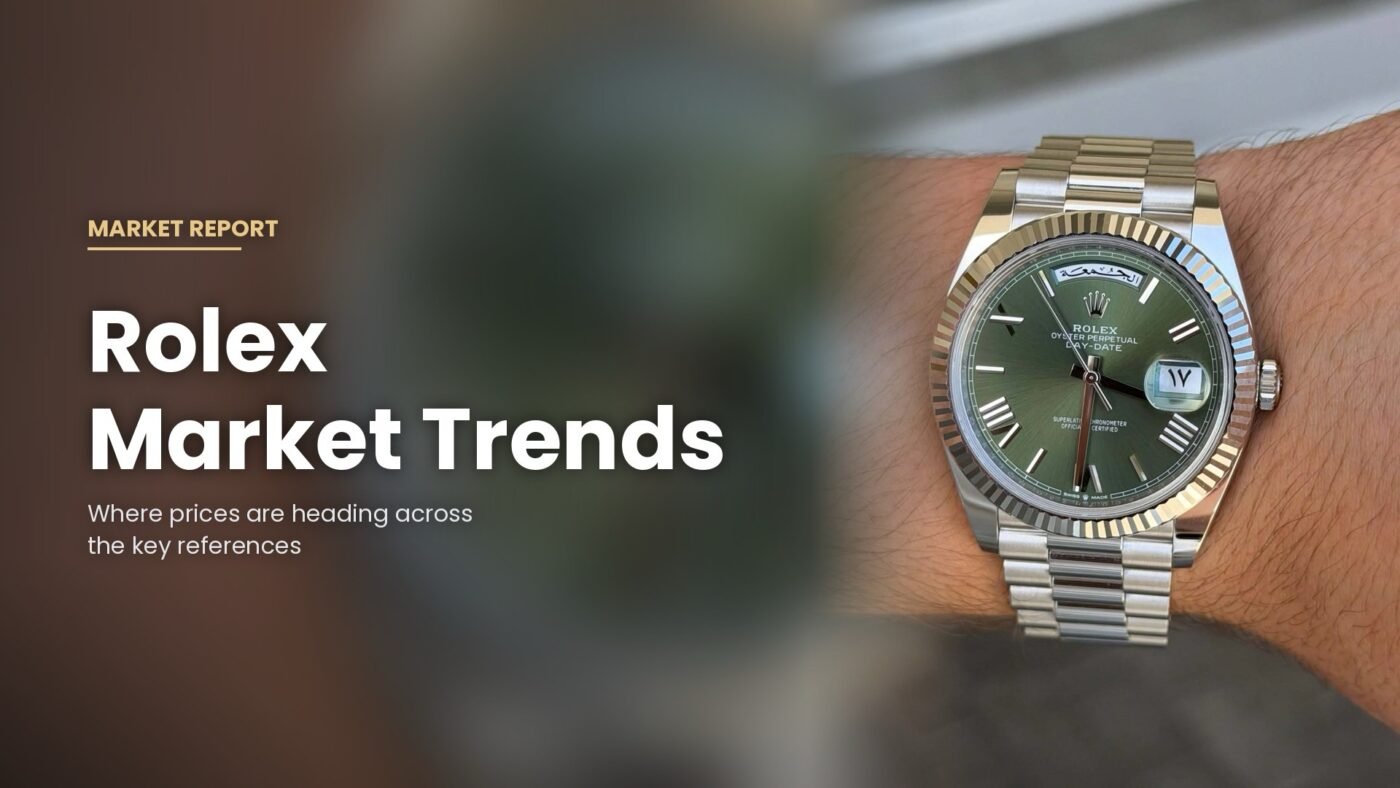
Rolex Market Trends
Sep
The Rolex market has become one of the most closely watched segments of the luxury watch industry. Strong global demand, controlled production, and limited availability have all contributed to Rolex’s position in the secondary market.
Understanding Rolex market trends can help buyers and sellers make more informed decisions based on current demand and pricing behavior.
HOW THE ROLEX MARKET HAS EVOLVED
The Rolex market has shifted from a retail-driven model to a highly active secondary market influenced by global demand.
Increased transparency, online platforms, and international buyers have created a more dynamic pricing environment.
Today, Rolex pricing is influenced as much by the secondary market as it is by retail availability.
KEY TRENDS IN THE ROLEX MARKET
Several key factors continue to shape Rolex market trends.
- High Global Demand — Rolex remains one of the most recognized luxury brands worldwide
- Controlled Production — Limited supply supports long-term value
- Authorized Dealer Waitlists — Limited retail availability increases secondary demand
- Strong Secondary Market — Active buying and selling continues to influence pricing
Scarcity and demand continue to be the primary drivers of Rolex pricing.
ARE ROLEX PRICES RISING OR STABILIZING?
Rolex prices can fluctuate depending on market conditions, even for high-demand models.
Some models have experienced strong appreciation, while others have stabilized following periods of rapid growth.
The broader luxury watch market continues to trend toward premiumization, with demand concentrating around established brands and iconic models.
Short-term volatility is normal, but long-term demand for Rolex remains strong.
Established models often remain resilient during broader market shifts.
WHY ROLEX HOLDS VALUE
Rolex watches are widely known for maintaining strong resale value due to consistent demand and controlled supply.
Key reasons include:
- Global brand recognition
- Strong liquidity
- Consistent collector demand
- Limited production growth
Rolex is often considered one of the most liquid luxury watch brands in the world.
Rolex watches benefit from one of the deepest global buyer networks in the luxury watch market.
WHICH ROLEX MODELS PERFORM BEST?
Certain Rolex models consistently perform well in the resale market.
- Submariner
- Daytona
- GMT-Master II
- Explorer
Professional sports models tend to see the strongest long-term demand.
Limited releases and discontinued references can also drive collector interest.
Discontinued Rolex references can experience increased collector demand due to reduced long-term availability.
HOW ROLEX MARKET TRENDS AFFECT SELLERS
Market conditions can directly impact the value sellers receive when selling a Rolex.
When demand is strong and supply is limited, sellers are typically in a favorable position.
Understanding current trends can help sellers choose the right time to sell.
If you’re considering selling, you can learn the best time to sell a Rolex.
HOW TO DETERMINE YOUR ROLEX VALUE
The most accurate way to determine Rolex value is to receive a real offer based on current market demand.
Online estimates can provide general guidance, but actual offers reflect real-time conditions.
If you’re ready to evaluate your watch, you can get a real offer here.
FREQUENTLY ASKED QUESTIONS
Is the Rolex market strong right now?
The Rolex market remains strong, supported by global demand and limited availability.
Do Rolex prices always go up?
No. Prices can fluctuate depending on demand and market conditions.
Why are Rolex watches hard to buy at retail?
Controlled production and high demand often lead to waitlists at authorized dealers.
Which Rolex models hold value best?
Sports models like the Daytona, Submariner, and GMT-Master II often maintain strong demand.
How do I know what my Rolex is worth?
Receiving a real offer is the most reliable way to determine current market value.